The Post-Digital Age: When the Robot in Your Pocket Got Legs
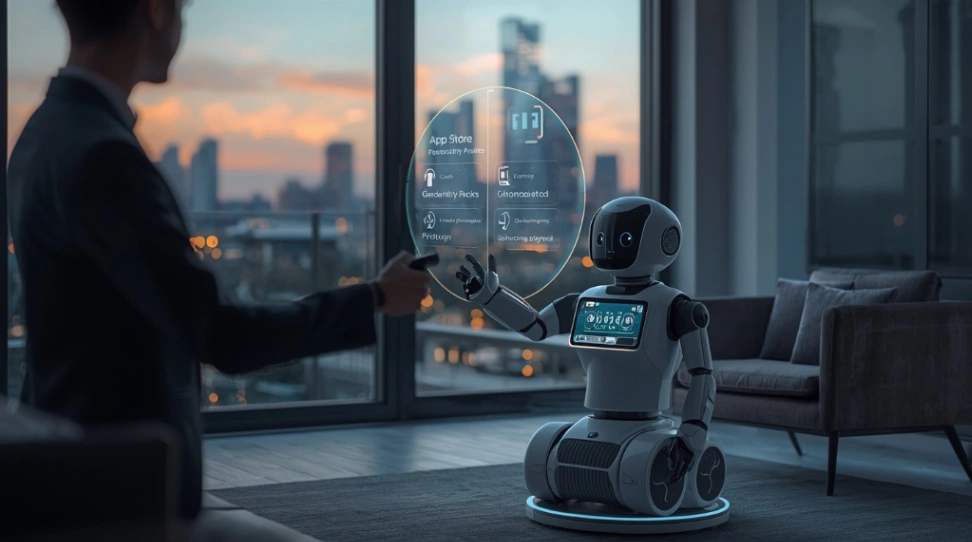
The mobile phone revolution was just the beta test. The era of personalized, ubiquitous robotics has arrived, transforming our daily lives from simply holding a world in our hands to co-habitating with the intelligence that powers it.
The mobile phone revolution was just the beta test. The era of personalized, ubiquitous robotics has arrived, transforming our daily lives from simply holding a world in our hands to co-habitating with the intelligence that powers it. We are living through a quiet cataclysm. Decades ago, we marveled that an entire library, communication hub, and navigation system could fit within a small glass and aluminum rectangle. But that was simply the post-it note of the true intelligence revolution. Today, that same intelligence has done something profound and irreversible: it has gained mobility, autonomy, and a place by our side. The post-digital age is defined not by how we access the digital world, but by how it accesses us. The personal robot, once a speculative fantasy of expensive prototypes, has become as common and essential as the smartphone of the 2020s. The integration has been seamless and total. Walking into a modern urban household, the familiar chime of a digital assistant is no longer a disembodied voice from a speaker, but a small, agile, bipedal unit (or perhaps an multi-limbed, spider-like assistant for more specialized homes) with an expressive, holographic face. It handles the domestic logistics that used to consume our leisure hours-from inventory management of food and supplies to managing complex home ecosystems. But its most critical role is partnership. It doesn't just manage the trash; it optimizes the household’s waste output based on real-time material logistics. It doesn't just remind you of an appointment; it manages the entire day's transport logistics, navigating human-robot interactions in public transport or personalized transit pods. The defining characteristic of this revolution is its radical affordability. The modular, open-source designs of core robotic platforms (like the globally accepted UniCore-7 platform) have made a baseline functional robot, capable of basic manipulation and spatial navigation, cheaper than a high-end smartphone used to be. The complexity is not in the hardware-advanced composite 3D printing handles that-but in the intelligence layers. This is the new "App Store": you download decentralized AI models, "personalities," and specialized function packs. From childcare and eldercare specializations to specialized culinary assistants or artistic collaborators, you customize your robot as easily as you would a home screen. But as a journalist, one must ask: what have we lost in the bargain? The great promise of increased efficiency has been fulfilled, but at what cost to the human connection? We have optimized away many of the small, shared, messy human moments of shared labor. The new 'digital divide' is no longer about information access, but about robotic access. Does a cheaper, less intelligent unit create a caste system of assistance? The robots of today are not the simple, obedient servants we once imagined; they are reflections of our own complexities and flaws, only with perfect recall. This is not science fiction anymore; it is the daily reality we must navigate, with our new, articulated companions walking beside us.